August 12, 2026
EDI Managed Services for Cleo: A Complete Cleo and C&A Technology Solution for Acumatica, SAP and JD Edwards
tl;dr of EDI managed services for Cleo
Whether you run Acumatica, SAP, or JD Edwards, EDI challenges tend to look remarkably similar: slow trading partner onboarding, recurring exceptions, fragmented support responsibilities, and limited visibility until something goes wrong.
EDI Managed Services for Cleo address these challenges by combining the Cleo Integration Cloud platform with the ERP-specific expertise and managed services needed to keep transactions moving reliably from trading partner to ERP.
C&A Technology (CAT) brings that model together across Acumatica, SAP, and JD Edwards, providing organizations with a consistent EDI strategy while still supporting the very different integration requirements of each ERP.
EDI Managed Services for Cleo: One Solution for Acumatica, SAP, and JDE
Cleo Integration Cloud and CAT's Four-Pillar EDI Managed Services Approach
If you searched for EDI Managed Services for Cleo, chances are you already recognize that some part of your EDI environment is not working as efficiently as it should.
What may be less obvious is that the underlying challenge is often not the ERP itself. It is the integration and support layer connecting your ERP to your trading partners.
EDI Managed Services for Cleo means having a dedicated team responsible for the day-to-day coordination, exception handling, mapping, ERP integration, and platform monitoring associated with your EDI environment.
For organizations operating more than one ERP, perhaps SAP in one business unit and JD Edwards or Acumatica in another, this becomes even more important. A common Cleo platform can provide consistency across the enterprise while CAT supplies the ERP-specific knowledge required underneath it.
That combination creates a foundation for managing EDI as an integrated business service rather than an unpredictable IT responsibility.
The Problem Every ERP Shares: EDI Doesn't Care Which One You Run
"The ERP determines how a document gets into your system. It has almost nothing to do with whether the trading partner relationship, exception handling, or visibility around it actually works."
Ask an IT director running Acumatica, SAP, or JD Edwards how long it takes to onboard a new trading partner, or who owns resolving a failed transaction, and the challenges are often surprisingly similar.
The issue is usually fragmentation.
EDI can evolve into a collection of separate technologies, trading partner connections, maps, ERP interfaces, and support responsibilities managed by different people or different vendors.
When a transaction fails, the first question can become:
- Is it the trading partner?
- The EDI map?
- The Cleo integration process?
- The ERP interface?
- Or the underlying business transaction?
That diagnostic delay can be one of the most expensive parts of an EDI failure.
The objective of EDI Managed Services for Cleo is therefore not simply to move transactions. It is to establish clear ownership and visibility across the complete process.
What an EDI Managed Services Provider Actually Does
A genuine EDI managed services provider does more than provide integration software.
C&A Technology organizes its services around a Four-Pillar EDI Managed Services Model that can be applied consistently across Acumatica, SAP, and JD Edwards.
-
-
- EDI Coordination — CAT manages trading partner relationships, communication, onboarding coordination, and issue resolution so internal teams do not have to manage every trading partner request or exception themselves.
-
- Mapping & Translation — CAT builds, tests, maintains, and supports the maps that translate standards such as X12 and EDIFACT into the formats required by the ERP and business process.
-
- ERP-Specific Configuration — This is where the model changes according to the ERP. Acumatica, SAP, and JD Edwards have very different integration architectures. CAT provides the ERP expertise required to configure each environment appropriately rather than forcing every ERP into the same technical model.
-
- Cleo Platform Translation Management & Monitoring — CAT supports the Cleo Integration Cloud environment, providing platform management, transaction visibility, alerting, issue identification, and SLA tracking.
Together, the four pillars provide an end-to-end support model, from the trading partner through Cleo and into the ERP.
-

EDI Managed Services for Acumatica
Acumatica organizations can be a particularly strong fit for this model. Companies choosing Acumatica are frequently looking beyond a simple accounting system replacement. They are building a cloud ERP platform to support growth across distribution, manufacturing, B2B commerce, retail commerce, and increasingly complex supply chains.
For B2B distributors and manufacturers, EDI is often part of that growth strategy rather than a separate technology project.
Acumatica's cloud-native, API-driven architecture also changes how EDI can connect with the ERP compared with traditional on-premise environments. Integration can take advantage of Acumatica's APIs and modern integration capabilities rather than relying exclusively on legacy batch-oriented approaches.
Cleo's Application Connector for Acumatica ERP further supports the connection between the two environments.
The opportunity for Acumatica customers is therefore significant: combine a modern cloud ERP with a modern integration platform while putting EDI Managed Services for Cleo behind both.
For new Acumatica customers, EDI can be designed into the overall ERP strategy from the beginning.
For existing Acumatica customers, CAT can help modernize EDI without requiring a change to the underlying ERP strategy.
EDI Managed Services for SAP
SAP presents a very different integration environment.
EDI transactions commonly interact with SAP through IDocs (Intermediate Documents) and the ALE (Application Link Enabling) layer. Successful integration requires an understanding of SAP's IDoc structures, partner profiles, message types, functional configuration, and exception processing.
C&A Technology's SAP EDI managed services combine this SAP knowledge with EDI coordination, mapping and translation, Cleo platform support, and centralized issue management. The SAP mechanics are unique. The managed services objective is not: provide reliable transaction processing, clear accountability, proactive exception management, and visibility across the complete EDI process.
EDI Managed Services for JD Edwards
JD Edwards has its own established EDI architecture.
EDI documents are commonly processed through the JD Edwards System 47 interface tables. Inbound transactions such as purchase orders can enter the interface tables before being processed into JD Edwards applications, while outbound transactions such as ASNs and invoices follow the corresponding outbound process.
This architecture is proven and well understood, but it requires specific knowledge of JD Edwards EDI configuration, System 47, batch processing, and the associated business applications.
CAT combines that JD Edwards expertise with Cleo-based translation, monitoring, trading partner management, and ongoing support.
This can be especially valuable for JD Edwards organizations looking to add modern visibility and managed services around a proven ERP environment without disrupting the underlying business applications.
EDI Managed Services for Cleo: One Platform Underneath All Three ERPs
The ERP integration layer may change, but the EDI management platform does not have to.
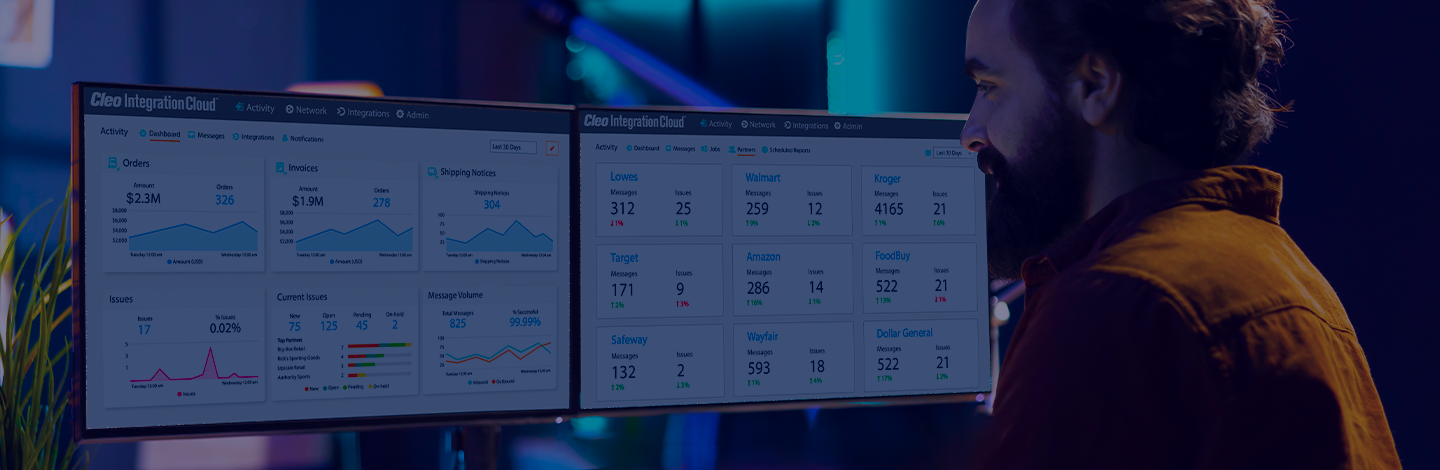
Cleo Integration Cloud can provide transaction visibility, document-level information, alerts, and monitoring whether a transaction originates through an Acumatica integration, an SAP IDoc, or a JD Edwards System 47 interface table.
That consistency becomes particularly valuable for organizations running multiple ERPs.
Following a merger or acquisition, for example, an organization might operate SAP in one division, JD Edwards in another, and Acumatica within a newer business unit.
Creating separate EDI strategies for every ERP can add another layer of fragmentation.
A common Cleo platform, combined with CAT's ERP-specific expertise, provides an alternative:
One EDI platform. Multiple ERPs. One managed services model.
CAT's relationship with Cleo reinforces this approach. C&A Technology has been recognized as a Cleo Partner of the Year, reflecting the depth of the relationship between the two organizations and their focus on ERP-connected B2B and EDI solutions.
From EDI Technology to an EDI Managed Service
There is an important distinction between buying EDI technology and receiving EDI Managed Services for Cleo.
Technology moves transactions. A managed service makes sure those transactions keep moving.
When a transaction fails, someone still needs to determine:
- Did the trading partner send the correct document?
- Did the mapping and translation work correctly?
- Did the Cleo integration process complete successfully?
- Did the ERP receive and accept the transaction?
- If not, where did the transaction fail — and who owns resolving it?
CAT's Four-Pillar model is designed to establish that ownership before a problem occurs.
Instead of requiring the customer to coordinate multiple vendors, CAT can work across the transaction path, from the trading partner through Cleo and into Acumatica, SAP, or JD Edwards.
Why Companies Choose C&A Technology
The value of CAT's approach comes from bringing several capabilities together within one service organization.
- ERP Expertise - CAT is an ERP implementation and consulting organization with expertise across Acumatica, SAP, and JD Edwards. The team supporting EDI therefore understands the business applications receiving and generating the transactions, not simply the integration platform moving them.
- EDI Expertise - CAT provides the coordination, mapping, translation, configuration, exception management, and support required to operate EDI as an ongoing business service.
- Cleo Expertise - Cleo Integration Cloud provides the common integration and visibility platform supporting the managed services environment.
- A Repeatable Managed Services Model - Rather than creating a different support structure for every ERP, CAT applies its Four-Pillar EDI Managed Services Model consistently while adapting the ERP configuration layer to the customer's specific environment.
- Continuity as the ERP Landscape Changes - Organizations may acquire companies, add business units, introduce another ERP, or eventually migrate from a legacy platform.
A multi-ERP approach to EDI Managed Services for Cleo provides the ability to maintain continuity in trading partner relationships, processes, support, and visibility as the ERP landscape evolves.
What Makes a Provider "Multi-ERP Ready"?
Traditional EDI provider evaluation still matters: implementation methodology, testing, support processes, trading partner onboarding, security, and SLAs should all be evaluated carefully.
But organizations operating, or potentially moving toward, a multi-ERP environment should ask several additional questions.
-
- Can the provider demonstrate real expertise in each ERP? Ask how they work with the actual integration mechanisms involved, Acumatica integration capabilities, SAP IDocs and ALE, and JD Edwards System 47 interface tables.
-
- Does the monitoring platform remain consistent across ERPs? If visibility changes every time the ERP changes, the organization may simply be replacing one form of fragmentation with another.
-
- How will EDI continuity be maintained during an ERP migration, acquisition, or multi-entity rollout? Trading partner operations still need to continue while the underlying ERP environment changes.
-
- Does the provider understand both the integration platform and the ERP? Resolving issues quickly requires determining whether the problem resides with the trading partner, mapping, integration platform, ERP interface, or business transaction.
The fewer handoffs required to answer that question, the better.
- Does the provider understand both the integration platform and the ERP? Resolving issues quickly requires determining whether the problem resides with the trading partner, mapping, integration platform, ERP interface, or business transaction.
Common Mistakes When Choosing a EDI Provider
- Choosing Based on ERP Expertise Alone Deep SAP, JD Edwards, or Acumatica expertise is important, but ERP expertise without strong EDI integration, monitoring, and trading partner capabilities leaves important gaps.
- Treating EDI Software and Managed Services as the Same Thing Implementing Cleo or any integration platform, does not eliminate the need for ongoing mapping, monitoring, exception management, trading partner coordination, and ERP support.
- Ignoring Multi-ERP Requirements Even organizations operating one ERP today may eventually add another through acquisition, expansion, or ERP transformation.The EDI strategy should be able to accommodate that change.
- Focusing Primarily on Price Service levels, responsiveness, transaction visibility, exception resolution, and accountability can be far more important than the lowest initial cost when business-critical transactions are involved.
Is Your Current EDI Environment Working as Well as It Could?
Regardless of which ERP you run, consider a few practical questions:
- How long does it take to onboard a new trading partner?
- How quickly can your team identify and resolve a failed EDI transaction?
- Do you have real-time visibility into transaction status and exceptions?
- How much internal IT time is spent supporting EDI instead of strategic ERP initiatives?
- Are your ERP and EDI environments supported by different organizations?
- When something fails, is there one organization accountable for identifying and resolving the problem?
- Could your current EDI strategy support another ERP if your business acquired another company tomorrow?
If the answers reveal gaps in visibility, ownership, responsiveness, or scalability, the issue may not be your ERP. It may be the way EDI is being managed around it.
Key Takeaways - EDI Managed Services for Cleo
- EDI challenges such as trading partner onboarding, recurring exceptions, fragmented ownership, and limited visibility occur across Acumatica, SAP, and JD Edwards.
- The ERP determines the technical integration method, but the managed services model can remain consistent.
- Acumatica APIs, SAP IDocs/ALE, and JD Edwards System 47 interface tables require different ERP-specific expertise.
- Cleo Integration Cloud can provide a common integration, translation, visibility, and monitoring platform across multiple ERP environments.
- A managed service should provide clear accountability from the trading partner through the integration platform and into the ERP.
- Multi-ERP capability becomes increasingly important for organizations growing through acquisition, expansion, or ERP transformation.
- CAT's Four-Pillar EDI Managed Services Model combines EDI coordination, mapping and translation, ERP-specific configuration, and Cleo platform management into one repeatable approach.
Conclusion
Acumatica, SAP, and JD Edwards may process EDI transactions differently, but every organization ultimately needs the same outcome:
Trading partner transactions that are sent, received, processed, monitored, and supported reliably.
Achieving that outcome requires more than EDI technology alone.
It requires trading partner coordination, mapping and translation, ERP-specific knowledge, integration platform expertise, monitoring, exception management, and clear accountability.
That is the value of combining Cleo Integration Cloud with C&A Technology's Four-Pillar EDI Managed Services Model.
One integration platform. Three ERP environments. One managed services strategy — from the trading partner through Cleo and into your ERP.
Book a Meeting
Related Articles



Follow us online